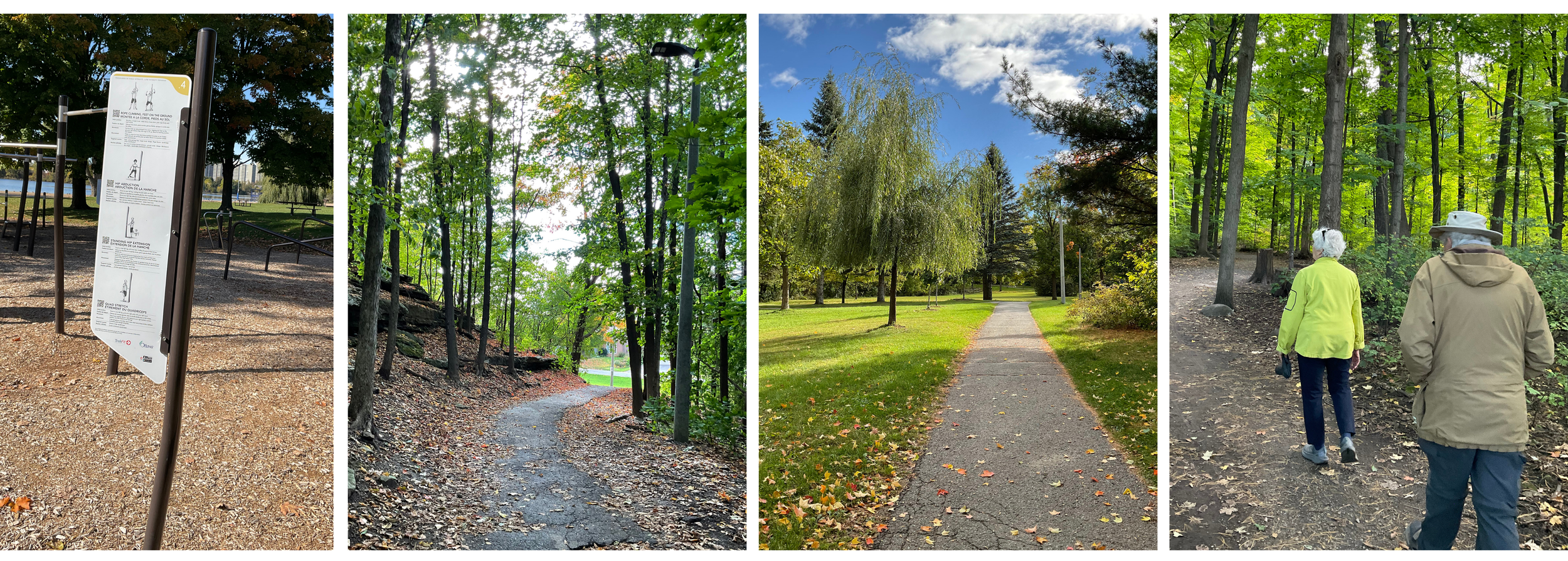
A Walk-Along Study: Exploring Older Adults’ Perspectives on Age-Friendly Features and Playfulness in Ottawa’s Public Spaces
Abstract:
Many cities are experiencing a profound demographic shift, with individuals aged 65 and above increasingly outnumbering younger populations. While longevity comes with many benefits, there is increasing evidence of the physical and social challenges associated with aging in urban settings. One neglected area of study is the role of play in addressing some of the challenges related to aging. Despite its recognized benefits for social connectedness and holistic health, play remains an overlooked concept in urban planning for older populations, particularly those from ethnically diverse backgrounds. This study examines how and to what extent play can enrich the lives of Canada’s aging population.
Using Ottawa as a case study, the research employed 14 walk-along interviews with participants aged 65 and above. The key research questions being addressed include:
(1) To what extent do Ottawa’s publicly funded playscapes support age-friendly design for older adults?
(2) What are the lived experiences and perspectives of older adults regarding play and social interaction in public spaces?
(3) How can urban planners and policymakers develop actionable recommendations that enhance inclusivity, maximize social welfare, and increase play opportunities for marginalized aging populations?
Role: Researcher, Editor, Research Assistant
Full Report: https://hdl.handle.net/1974/34511
Achievements
Social Sciences and Humanities Research Council (SSHRC) Research Scholarship Recipient (2024)
Canadian Institute of Planners (CIP) Research Scholarship: Recognized for Research on Equity, Diversity, Inclusion, and Accessibility (2025)
Poster Presenter, Ontario Professional Planners Institute (OPPI) Conference (2024)
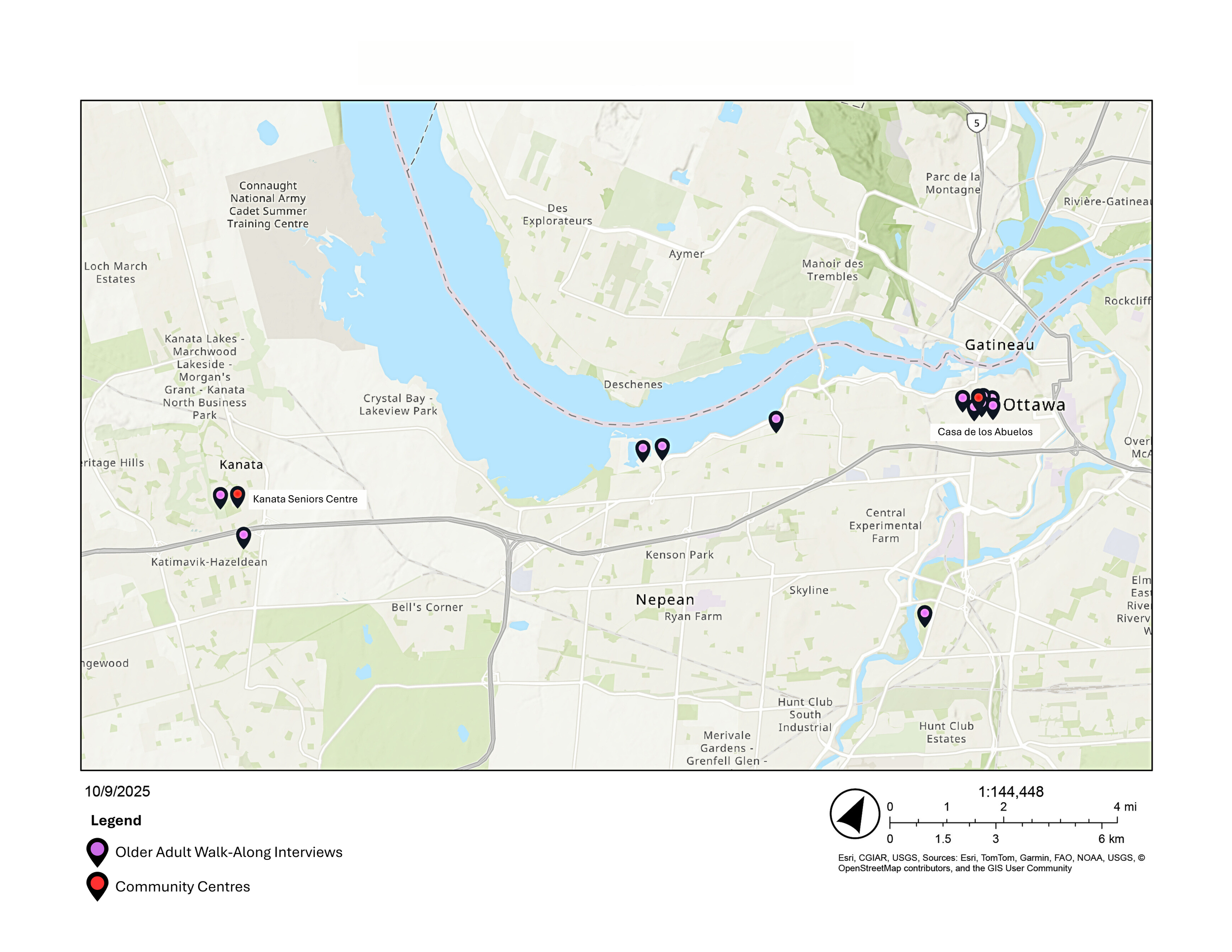
Methodology
-
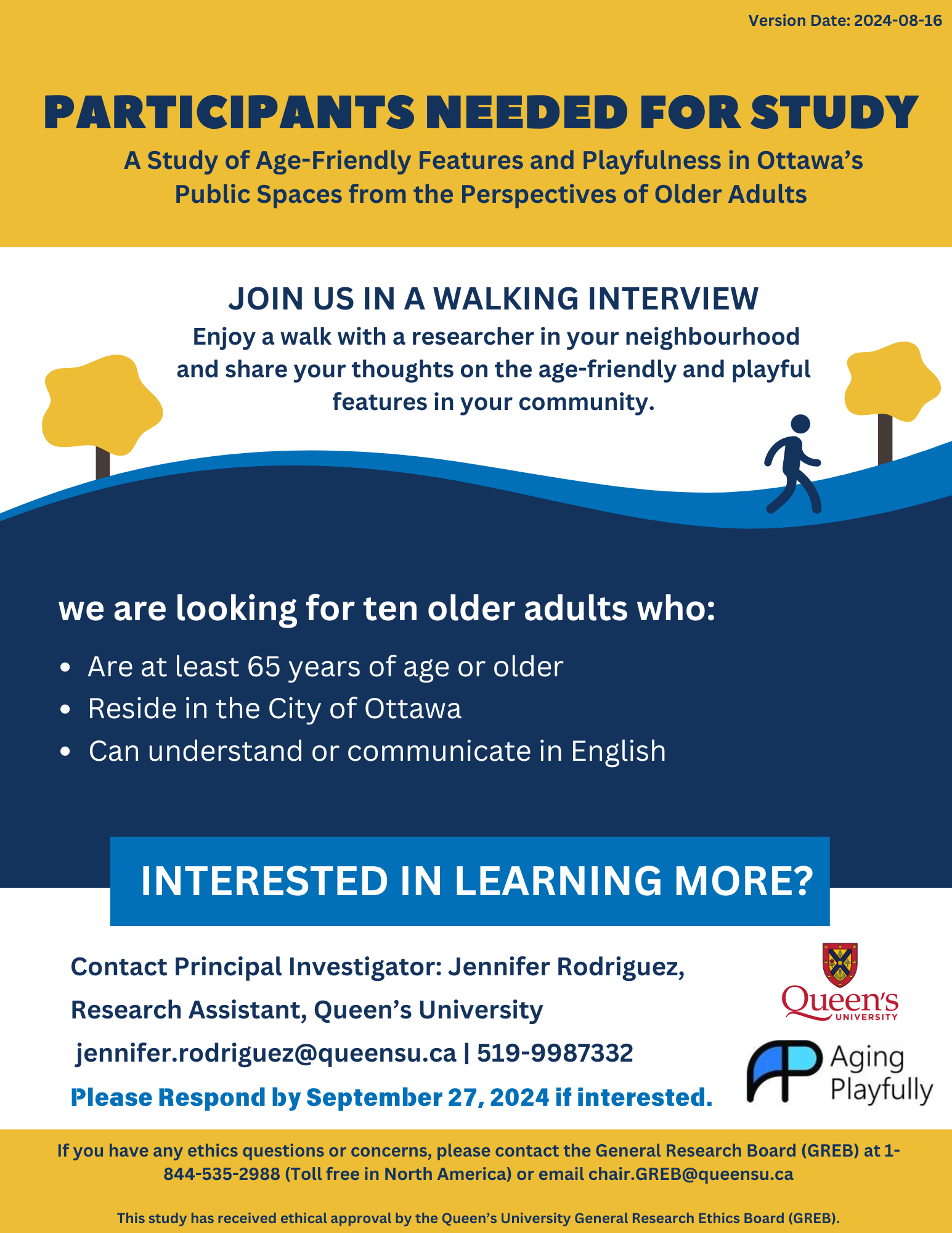
Participant Recruitment
Older adult community centres in Ottawa were identified and shortlisted based on their location and neighbourhood equity index scores (identified in Ottawa’s Neighbourhood Equity Index (2024)). To ensure diversity, the recruitment sought older adults with a range of demographic characteristics, including gender, race, and immigration status, with a particular focus on capturing the voices and perspectives of older adults from underrepresented communities.
-
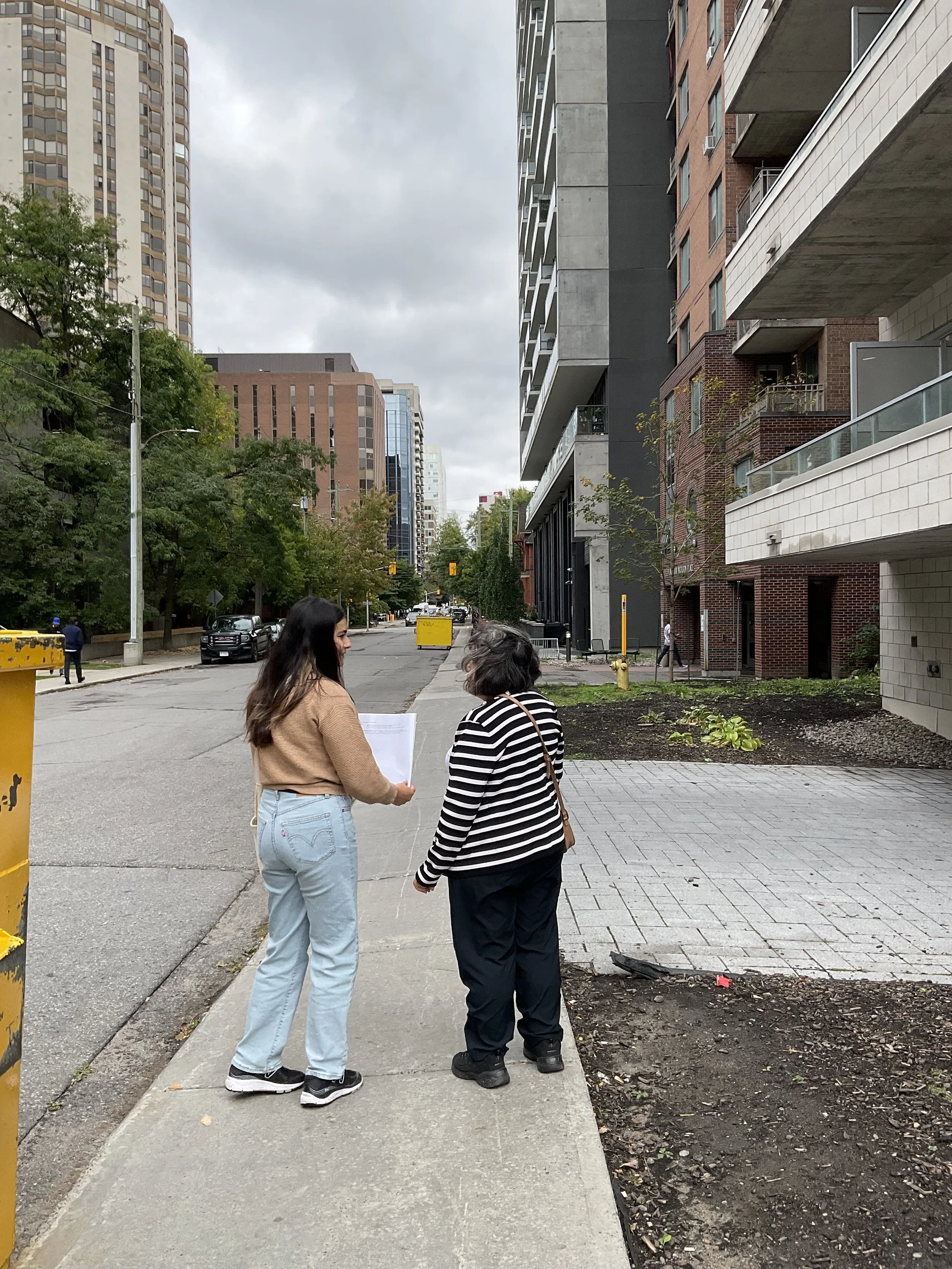
Walk Along Interviews
A total of 14 participants were recruited for the study. The go-along interview combines interviewing with participant observation, enabling researchers to accompany participants in their own neighbourhoods during their regular routines. Observing and interviewing older adults in distinct spaces provided an ideal setting for understanding the real-life experiences of city living, and exploring how play experiences vary by location, setting (across indoor or outdoor spaces), and neighbourhood context (Yin, 1984).
-
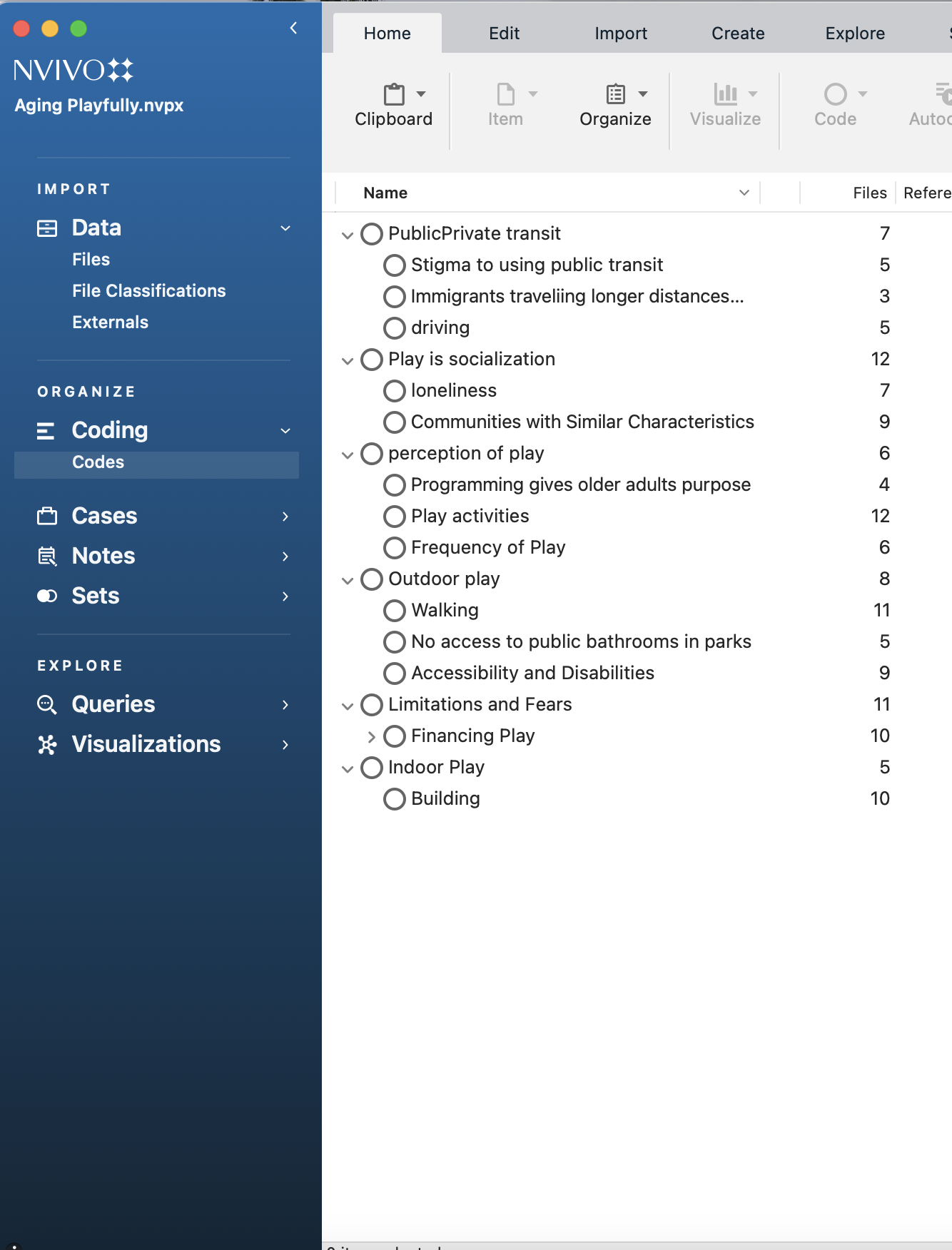
Transcription and Data Analysis
Interview transcripts were analyzed using the NVivo software. Code-recode procedures were applied to identify and categorize emerging themes, synthesizing themes and relevant quotes to ensure that the research questions were effectively addressed. Additionally, photos taken during the walks served as a supportive tool to help the researcher recall conversations about urban attributes.
Findings
The study concludes with five policy recommendations to support equitable, play-friendly environments. The report’s insights inform and advance emerging age-friendly planning research, providing actionable strategies for enhancing social inclusion and healthy aging in Canadian cities.:
(1) recognize play within social determinants of health frameworks
(2) invest in culturally responsive public spaces
(3) expand intergenerational programming
(4) improve transit and mobility infrastructure
(5) reconceptualize walking as a form of playful engagement.